

Everybody wants the same things. Not to the same degree.
Professor Steven Reiss spent a career asking what people actually want, and why. The answer was 16 basic desires, each felt to a different degree, and a way to measure them that has held up for more than twenty-five years.
A sample profile. Scores run from −2 to +2. Beyond ±0.84 a desire is strong or weak, and those are the ones that predict behaviour. Click a desire to read what it means.
Two parts to every desire
Each basic desire has a goal that is valued for its own sake and an intensity: how much of it you need before you feel satisfied. A person with a strong desire for Order needs a lot of structure before they feel settled. A person with a weak desire for Order feels hemmed in by the same plans.
Culture, upbringing and circumstance shape how a desire is expressed. They do not decide whether you have it. That is why the profile predicts behaviour across settings, from a boardroom to a change room to a kitchen table.
The Reiss Motivation Profile® asks 128 questions and takes about 20 minutes. It scores all 16 desires on the same scale, against a norm group of more than 135,000 people, so a score means the same thing whoever you are.
The 16 basic desires
Every desire is universal. Everyone has all sixteen. What makes a person individual is the strength of each one. Click a desire for its definition and how a strong or weak need tends to show up.
The evidence
The profile was developed empirically from studies of more than 6,000 people on four continents, passed peer review for publication in academic journals, and has been validated by independent researchers. It was re-normed in 2017 and again in 2022.
How it is used
In sport, coaches and high-performance staff use it for selection conversations, debriefs and culture. In business, leaders use it to lead the person rather than the role, and HR uses it in hiring, development and team design. Individuals use it to understand why some weeks feel effortless and others feel flat.
The profile is never a label. Two people can share a strong desire for Power and express it in completely different ways. The value is in the conversation the scores make possible, and MotivationLab is built to have that conversation with you every day.
The licence
The Reiss Motivation Profile® is published exclusively by IDS Publishing Corporation in the United States, founded by Professor Reiss in 1988. RMP Aus Pty Ltd, trading as Reiss Motivation Australia, is the licensed partner for Australia, New Zealand and the United Kingdom. Questionnaire responses are scored by IDS Publishing in de-identified form. Personal information is hosted in Australia.
Professor Steven Reiss, 1947 to 2016
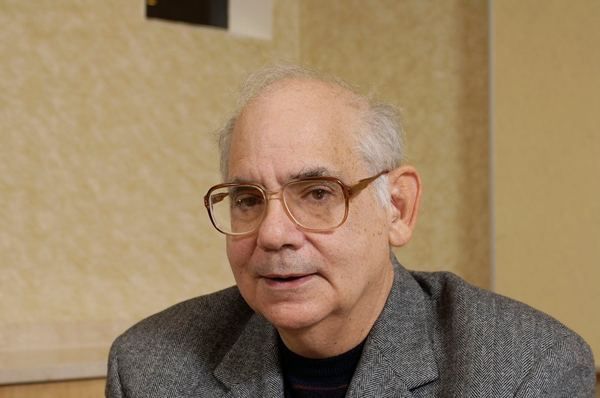
A graduate of Dartmouth College with a doctorate in psychology from Yale University and a clinical internship at Harvard Medical School, Steven Reiss was Professor of Psychology and Psychiatry at The Ohio State University. He contributed original ideas, assessment methods and research to four fields: anxiety disorders, developmental disabilities, intrinsic motivation, and the psychology of religion.
He wrote eight books and edited two more, gave invited talks in 44 states and 12 countries, and received five national awards for research, clinical services and leadership.

See your own 16 desires.
Twenty minutes of honest answers, and you will know what actually drives you. Then a coach who knows your scores helps you use it, every day.